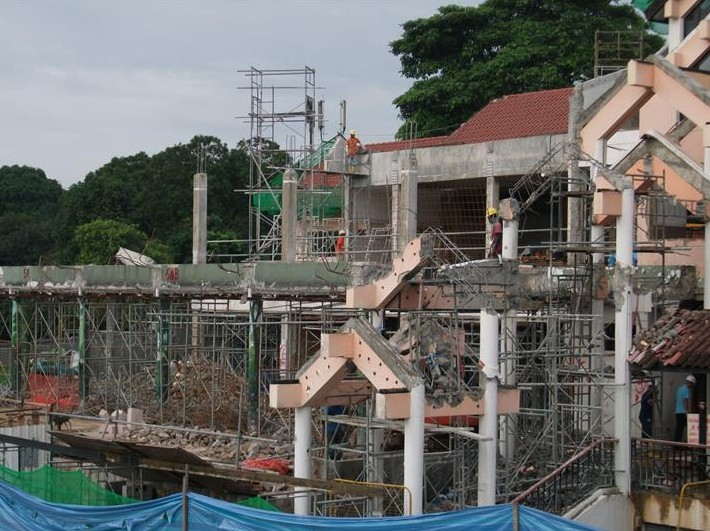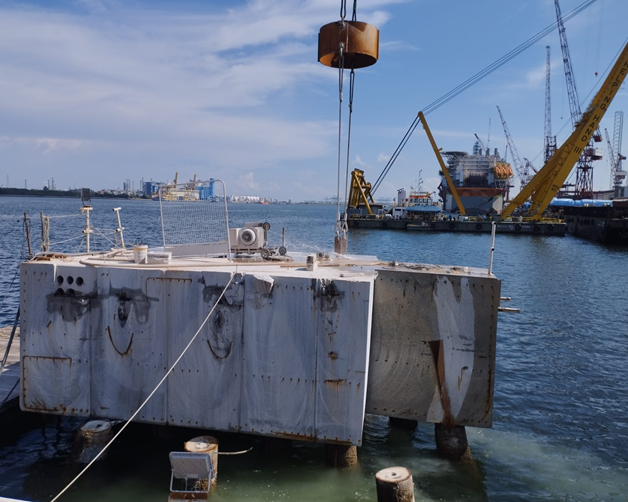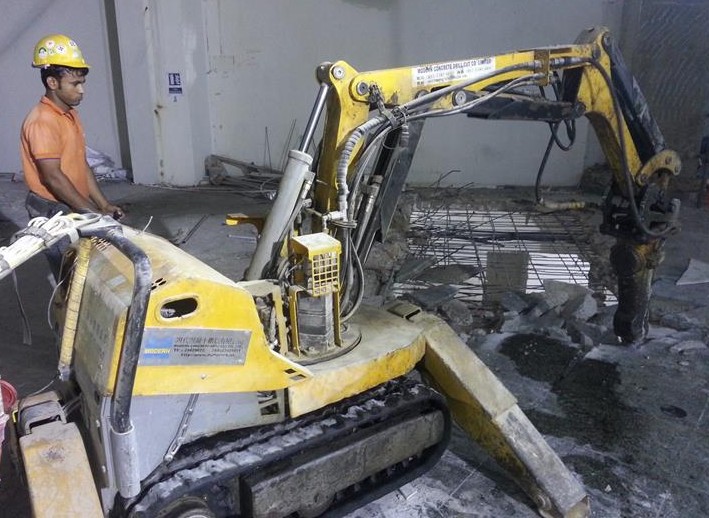
Precision deconstruction, often referred to as controlled demolition, is increasingly essential in Singapore’s built environment, where buildings share party walls, sit above MRT tunnels, or operate round-the-clock. The objective is safe dismantling with predictable structural behaviour, minimal disturbance, and clear material traceability.
Principles of Precision Deconstruction
This approach combines structural engineering expertise with specialised equipment, prioritising:
- Safety of workers and the public
- Protection of neighbouring properties, especially in conserved shophouse rows
- Low vibration, important near LTA and SLA-protected assets
- Clean recycling streams for concrete, steel, and fit-out materials
- Documented sequences and measurements for compliance with BCA and safety audits
Unlike conventional demolition that focuses on speed, precision deconstruction prioritises step-by-step removal and material-appropriate techniques.
Key Techniques
Hydraulic Splitting
Used when thick elements must be removed without disturbing nearby structures:
- Basement raft slabs
- Old pile caps
- Rock heads in excavation
- Tunnel or shaft construction in restricted zones
Splitters produce controlled fractures with very low vibration, helping projects stay within NEA limits.
Concrete Crushing & Shearing
Concrete demolition shears crush concrete and cut reinforcement in one controlled motion.
Applications include:
- Creating lift shafts during HDB upgrading
- Removing portions of beams/slabs without affecting adjacent areas
- Cutting openings for MEP upgrades in hospitals or shopping centres
Steel Cutting Without Heat
Steel shears and tank cutters are preferred in fire-sensitive or ATEX-classified spaces, such as:
- Jurong Island chemical plants
- Petrol depots
- LNG and fuel storage facilities
- Electrical rooms and substations
These tools minimise sparks and avoid thermal distortion.
Integrated Methods
Often, projects combine:
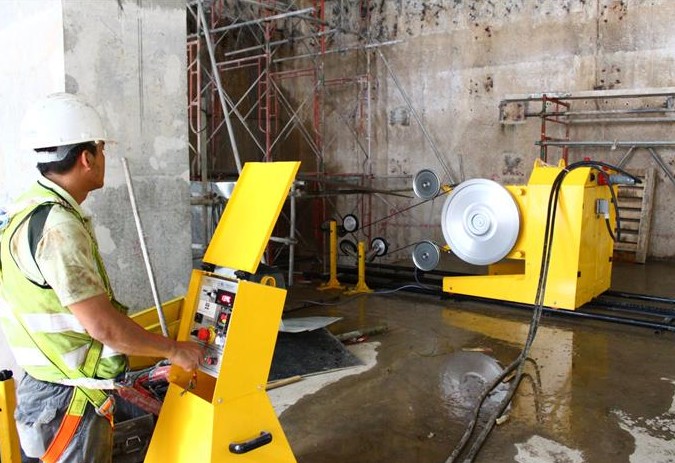
- Saw-cutting for clean lines
- Core drilling for anchor points
- Shearing for controlled removal
- Splitting for very thick or reinforced components
Typical Singapore-Based Workflows
- Creating an Opening in a Reinforced Concrete Wall
-
- Verify utilities (SP PowerGrid, PUB water lines, comms)
- Confirm structural capacity and install temporary supports
- Mark the opening and perform core drilling or saw-cutting
- Use demolition shears to nibble the concrete in segments
- Cut rebar with steel shears
- Finish edges for reinstatement
- Reducing a Pile Cap or Foundation Head
-
- Establish drilling pattern and safety exclusion zones
- Drill holes for splitter insertion
- Apply hydraulic splitting to fracture concrete
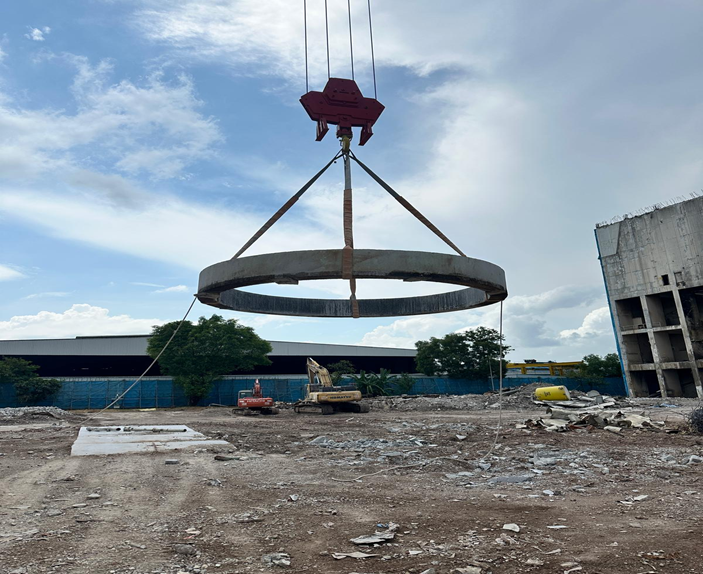
- Lift out segments using cranes or forklifts
- Sort and dispose of materials according to BCA recycling guidelines
Environmental & Regulatory Considerations
Singapore regulations emphasise:
- NEA noise limits, especially for residential and hospital zones
- Vibration monitoring for MRT/LTA critical structures
- Dust control via water misting and localised enclosures
- Permits and notifications for works near critical utilities or public roads
- Hazard assessments and Safe Work Procedures (SWP)
These requirements encourage the use of quieter, non-percussive demolition systems.
When Controlled Demolition Is Most Efficient
Precision deconstruction is ideal when:
- Working indoors or at night
- Adjacent structures are sensitive or occupied
- There is a need to preserve parts of the building
- Blasting or impact methods are restricted
- Fire/ignition risk must be avoided
Hybrid methods – splitting + sawing + shearing, often achieve the best balance between safety, speed, and environmental control.
Conclusion
In Singapore’s urban setting, controlled demolition is not simply an alternative technique – it is often a requirement. Its emphasis on low noise, low vibration, and carefully engineered sequences ensures safety, protects nearby assets, and supports sustainable recycling practices across construction and A&A projects.
With extensive experience in controlled demolition and concrete cutting, Modern Concrete Drill Cut (Singapore) Pte Ltd provides reliable, low-vibration, and precision-focused demolition solutions for complex projects across Singapore.